
Last week I had the pleasure of visiting the Santa Fe Institute, where I was hosted by Melanie Mitchell, a SFI professor working at the intersection of artificial intelligence, cognitive science, and complex systems, and also a recent finalist of the Cosmos Prize.
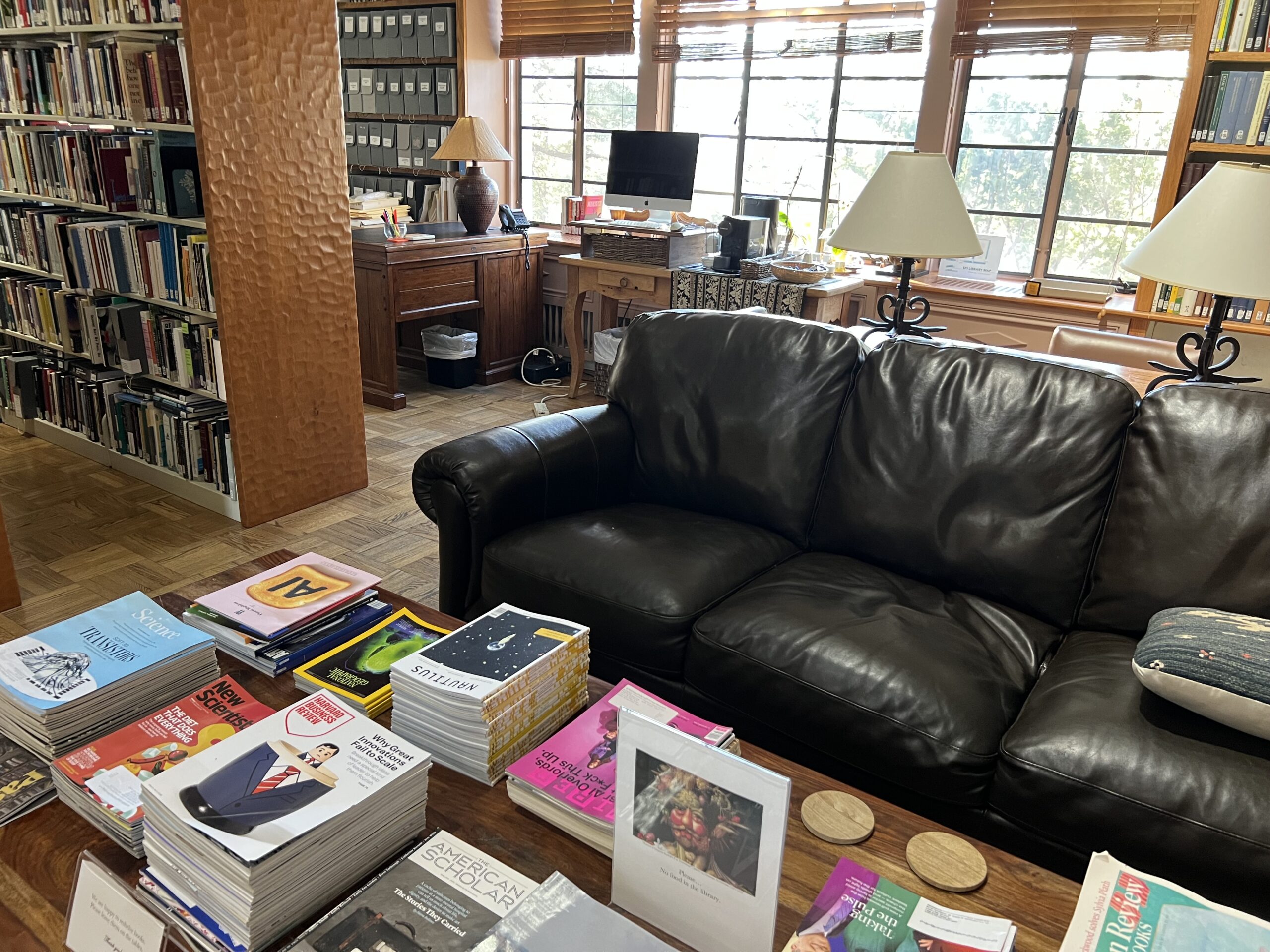
The Santa Fe Institute (SFI) is a rather unusual place in the scientific landscape. Founded in the 1980s by a group of physicists, economists and biologists, it was conceived as a space where researchers could explore problems that do not belong neatly to a single discipline. Complexity science is the common language: systems in which many interacting parts produce collective behavior, from biological evolution and ecosystems to markets, social institutions and artificial intelligence.
What makes SFI special is its intellectual atmosphere. People are encouraged to move freely across disciplinary boundaries, asking questions that might sound naïve in a specialized department but that sometimes turn out to be exactly the right ones. Conversations shift between physics, anthropology, computer science, economics and philosophy, and one is constantly reminded that many of the most interesting scientific problems live between fields rather than inside them.
During my visit I gave a seminar on dark matter, focusing on the epistemology of discovery: how scientists infer the existence of invisible phenomena, how competing models evolve, and how the limits of observation shape our understanding of the universe.
But the highlight of the visit was really the opportunity to spend time in individual conversations with SFI scholars.
With Sam Bowles, one of the leading thinkers on the evolution of cooperation and economic behavior, we discussed how institutions can shape human preferences and social norms. We also talked about the deeper political tension this raises: societies depend on norms such as trust, reciprocity and civic responsibility, yet attempts to deliberately cultivate such norms immediately raise fears of social engineering. One of his most striking observations was that institutions influence behavior less through explicit persuasion than through the daily patterns of interaction they create. Interestingly, he also pointed to nationalism, despite its dangers, as historical evidence that human beings are capable of expanding their circle of solidarity far beyond immediate kin or tribe. Can globalism help us do the same across national (and other) boundaries?
With Fred Cooper, our conversation moved in a very different direction. We discussed forms of knowledge that precede conceptualization: ways of engaging with reality that are not primarily analytical. That discussion unexpectedly evolved into a short session of Buddhist meditation exercises, exploring attention and perception as tools for understanding the world before it is framed in concepts.
I also had fascinating discussions with Cris Moore and Melanie Mitchell about the role of artificial intelligence in science and society. One refreshing aspect of these conversations was how quickly the discussion moved beyond the familiar polarized narratives that dominate public debate: the oscillation between technological doom and utopian optimism. When those voices are absent, the discussion becomes far more interesting and nuanced.
With James Holehouse, we discussed the role of regulation in complex systems, from biological organisms to social institutions, as well as the importance of communicating science effectively to the broader public. We also talked about writing for general audiences and the challenges of translating scientific ideas without oversimplifying them.
Finally, I had a stimulating exchange with Marina Dubova about the role of concepts in science. Her work explores a deceptively simple question: what epistemic functions do scientific ontologies actually play? Her answer — which resonates strongly with my own interests — is that scientific concepts are not merely labels for things in the world. They are perspectives that shape every stage of scientific work, from the way data are collected to how results are interpreted and communicated. In that sense, improving scientific concepts cannot be separated from understanding how those concepts have already shaped the scientific process itself.
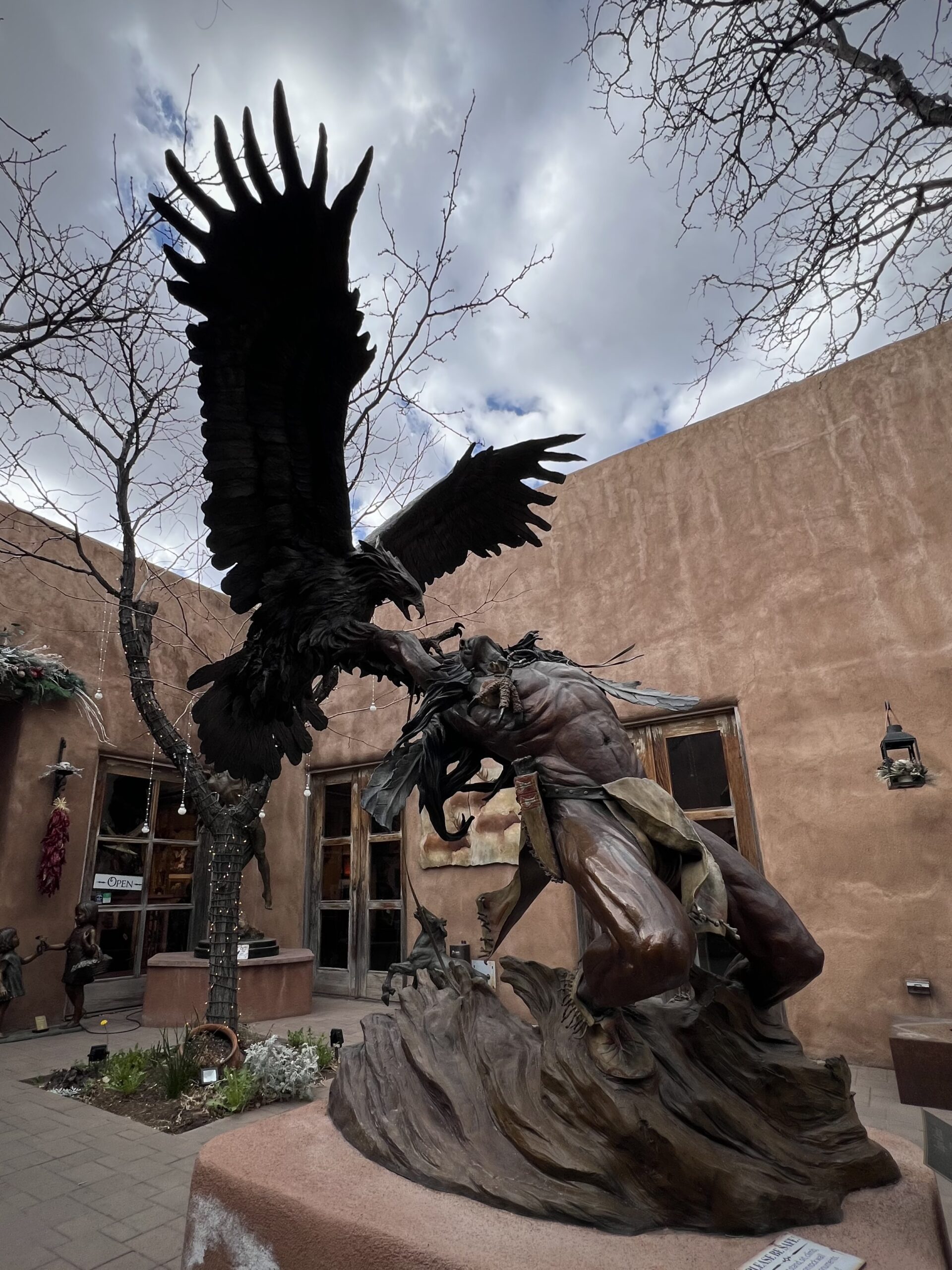
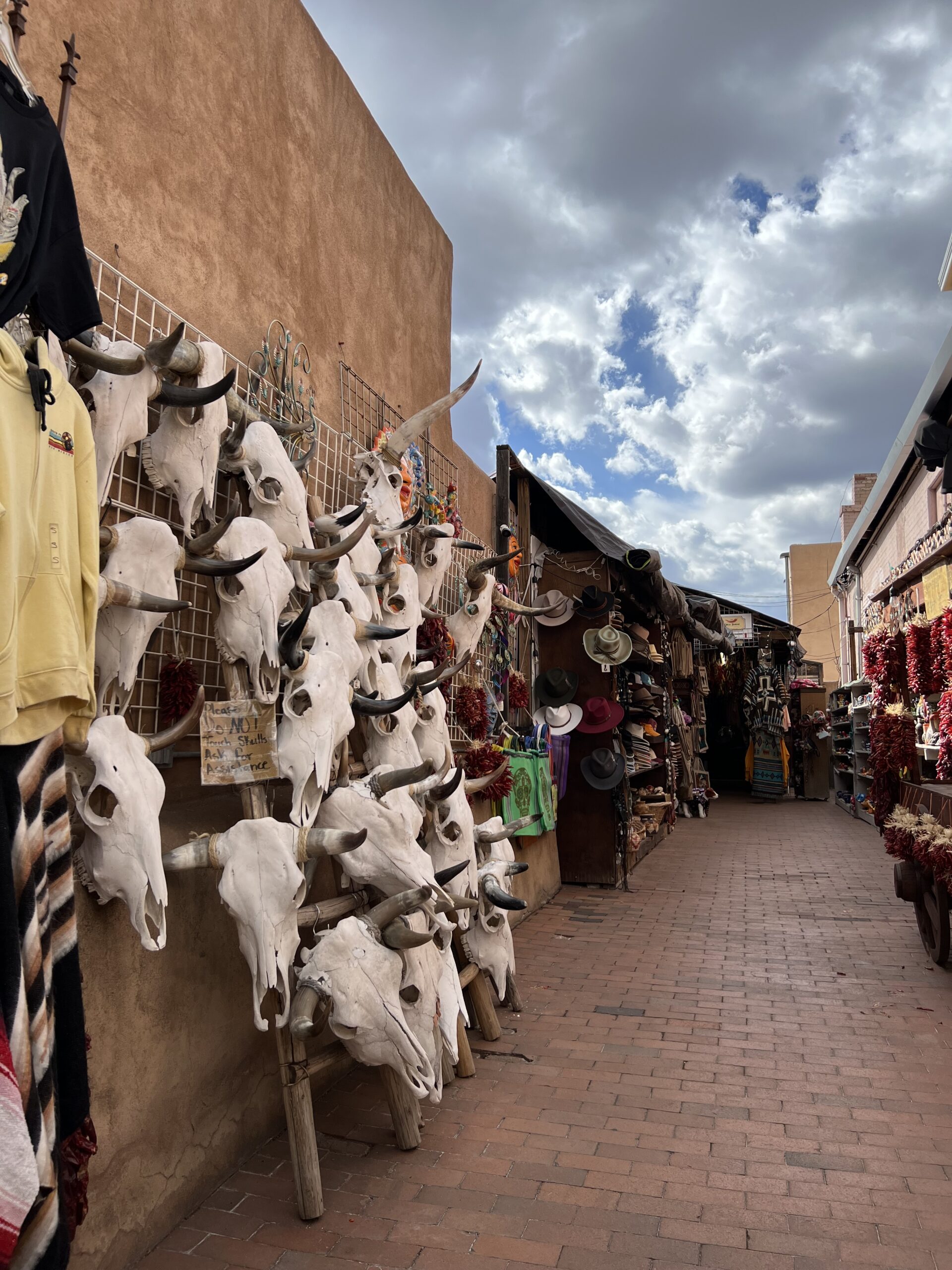
The visit was also an opportunity to learn more about the history of New Mexico and Santa Fe, including the complex history and present status of Native American communities. Santa Fe itself is a remarkable place: a city where Indigenous traditions, Spanish colonial history, and contemporary culture coexist in a unique way. The local art scene is particularly vibrant, with galleries, museums and public spaces that reflect this rich cultural history.
In the end, what makes the SFI memorable is not (only) the work being done, but the conditions they create for thought. Unstructured interactions, bold questions, and conversations opening freely onto unexpected terrain. The SFI remains one of those rare places where this still happens.